Smart plugs are the cheapest automation in the house, which is why it stings when the
cheap one is also the wrong one. Seven checks separate the keepers from the drawer
fillers.
The seven checks
- Load type. Heaters, kettles and irons pull far more current than lamps. Check
the plug's maximum resistive load, not just the "16A" printed on the housing — and
never plan to automate a device whose manual warns against timers. - Restart behavior. After a power cut, does the plug come back on, off or
last state? A router on a plug that defaults to off will silently take your
internet down until you notice. The spec sheet calls this "power restore state" —
look for "user configurable". - Energy monitoring. Useful for spotting the space heater that doubles your bill.
Note that monitoring accuracy on cheap plugs can be rough; treat it as a trend, not
a meter reading. - Radio and hub. Wi-Fi plugs crowd your router; Zigbee/Thread plugs need a hub
but react faster and survive router reboots. Match the radio to your setup — see
our protocol guide. - Physical size. Two plugs side by side on a power strip block each other more
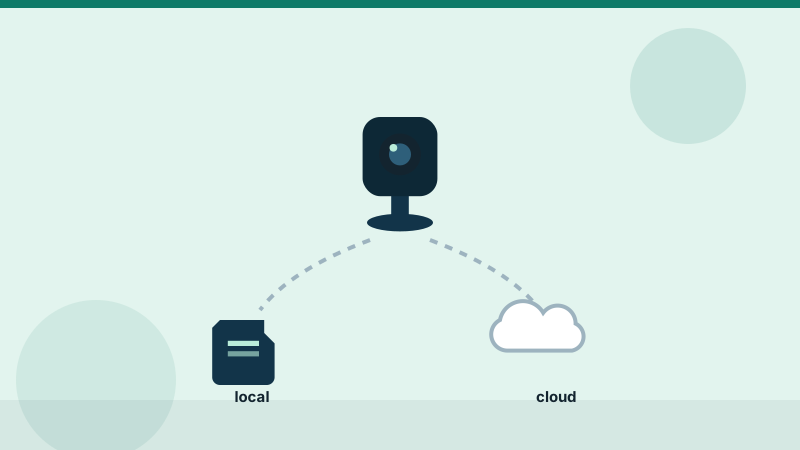
often than you would think. Slim forms or spaced strips solve it. - Schedule independence. Confirm schedules run on the plug itself, not only in
the cloud. A plug that needs the vendor's server to flip at 7 a.m. stops being
reliable exactly when your connection isn't. - Safety certification. In the EU/US check for CE / UKCA / UL markings
appropriate to your region. Unbranded plugs handling mains power are the one place
not to save money.
Where plugs shine — and where they don't
Great first targets: lamps, fans, coffee machines, holiday lights, anything with a
physical switch that stays where you leave it. Poor targets: anything with electronics
that expect a button press to start (some air purifiers, microwaves with door latches)
— the plug restores power, but the device stays asleep.
Editorial note. This guide is compiled from official product documentation and practical buying checklists, not hands-on testing. Verify specifications and current pricing with the manufacturer before you buy. See our affiliate disclosure for how we fund this work.